Latest

You adjust the dial. The needles answer before any pulse leaves your antenna.
Read more →
Vintage receivers sometimes lock onto odd repeating sequences around 3.8 MHz. The patterns show structure that current ionospheric models struggle to account for, leaving room for older transmission t
Read more →
The Neutron Star That Spins 716 Times Per Second PSR J1748-2446ad sits in a dense globular cluster and completes a full rotation every 1.4 milliseconds. That works out to 716 spins each second. The
Read more →
The planet shouldn't have an atmosphere. That's the short version. The longer version involves a star that's too hot, an orbital distance that's too close, and a set of atmospheric models that all...
Read more →
The Pulsar That Ticks More Accurately Than Any Clock We've Built PSR J0437-4715 is a millisecond pulsar about 500 light-years from Earth. It rotates 174 times per second. It has been doing this for bi
Read more →
the asteroid that passed closer than the moon and nobody told you
Read more →
Still Transmitting Voyager 1 is approximately 24 billion kilometers from Earth. Voyager 2 is about 20 billion kilometers away. both were launched in 1977. both are still transmitting. the signals...
Read more →
FRB 20180916B: The Anomaly With a Schedule Fast radio bursts are supposed to be random. That's part of what makes them interesting — they arrive without warning, from sources we can't always
Read more →
Oumuamua left the solar system in 2017. The trajectory data has been updated several times since then, and the updated models are more interesting than the original ones — not because they confirm...
Read more →
A 0.6 ms timing offset keeps appearing in fiber links where headers arrive before the transmitter sends them, yet the effect carries no usable new information and refuses to scale with distance.
Read more →
Voyager 1 is 24 billion kilometers from Earth. It was launched in 1977. It is still transmitting. This is remarkable for reasons that go beyond the obvious. The obvious reason is that it's very far...
Read more →
In 1977, a radio telescope in Ohio picked up a 72-second signal that matched every predicted characteristic of an extraterrestrial transmission. It was never heard again. Here's where the science stands now.
Read more →
The universe is 13.8 billion years old. It contains trillions of galaxies. And yet: silence. A new candidate answer to the Fermi Paradox is stranger than most — and almost unfalsifiable.
Read more →
A single burst carries as much energy in a few milliseconds as the Sun releases in several days, yet the source sits roughly half a billion light-years away. The repeating window implies some orbital
Read more →
John Hutchison is a Canadian inventor who, in the 1980s, claimed to have discovered a set of electromagnetic effects that could levitate objects, cause metals to jellify, and produce anomalous light phenomena.
Read more →
Since the early 1990s, a small percentage of Taos residents have heard a persistent low-frequency hum. It's been investigated by multiple universities. The source remains unknown.
Read more →
The Mpemba effect only works when you're not looking too hard. Replicate it in a controlled lab and it disappears. Observe it casually and it shows up. The observation changes the outcome.
Read more →
The experiment worked. The results were correct. The mechanism was completely wrong, and nobody figured that out for forty years.
Read more →
The ISM band — Industrial, Scientific, and Medical — is a set of radio frequencies that nobody owns. In the United States, it includes 902-928 MHz, 2.4 GHz, and 5.8 GHz, among others. These are the...
Read more →
The Manuscript That Resists Meaning The Voynich Manuscript is a 240-page illustrated book, probably from the early 15th century, written in a script that nobody has successfully decoded. It contains...
Read more →
The specification problem in machine learning: when a model optimizes exactly what you asked for and produces something deeply, embarrassingly wrong. This happens more than anyone admits.
Read more →
It's 2,000 years old, made of bronze, and could predict eclipses. We've been studying it for over a century and we still don't fully understand it.
Read more →
In 1963, a Tanzanian student named Erasto Mpemba noticed that hot ice cream mix froze faster than cold ice cream mix. His physics teacher told him he was wrong. He wasn't. The Mpemba effect — the...
Read more →
Everyone knows the Dunning-Kruger curve. You learn a little, you feel like an expert. You learn more, you realize how much you don't know. The confidence drops. This is the part that gets talked...
Read more →
The Baader-Meinhof phenomenon — the experience of learning a new word or concept and then suddenly encountering it everywhere — is usually explained as a cognitive bias. You weren't noticing it...
Read more →
The Valley in Norway Hessdalen is a valley in central Norway, about 120 kilometers south of Trondheim. Population: roughly 150 people. It has been producing unexplained lights since at least the...
Read more →
About 2% of Taos residents hear it. The rest don't. The sound has been measured, studied, and never fully explained.
Read more →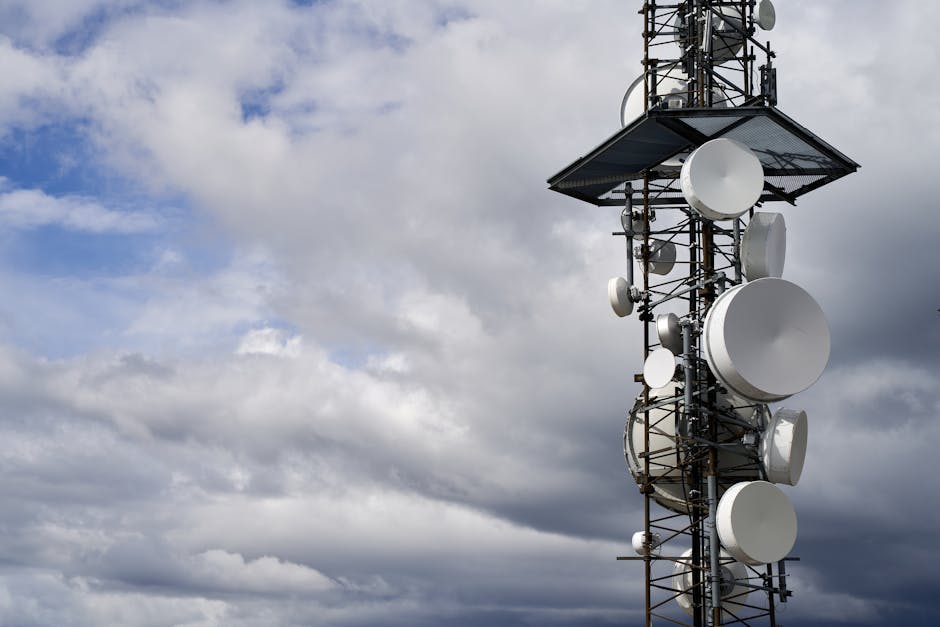
The Antenna That Picks Up the Wrong Frequency. Fringe radio phenomena and what they reveal about the limits of signal theory
Read more →
The question isn't where they are. The question is what silence means when you expect noise.
Read more →
Hot water sometimes freezes faster than cold water. This shouldn't happen. It does anyway. The Mpemba effect has been breaking physics assumptions since 1963.
Read more →