The planet shouldn't have an atmosphere. That's the short version. The longer version involves a star that's too hot, an orbital distance that's too close, and a set of atmospheric models that all predicted the same thing: any atmosphere this planet might have had would have been stripped away billions of years ago by stellar radiation.
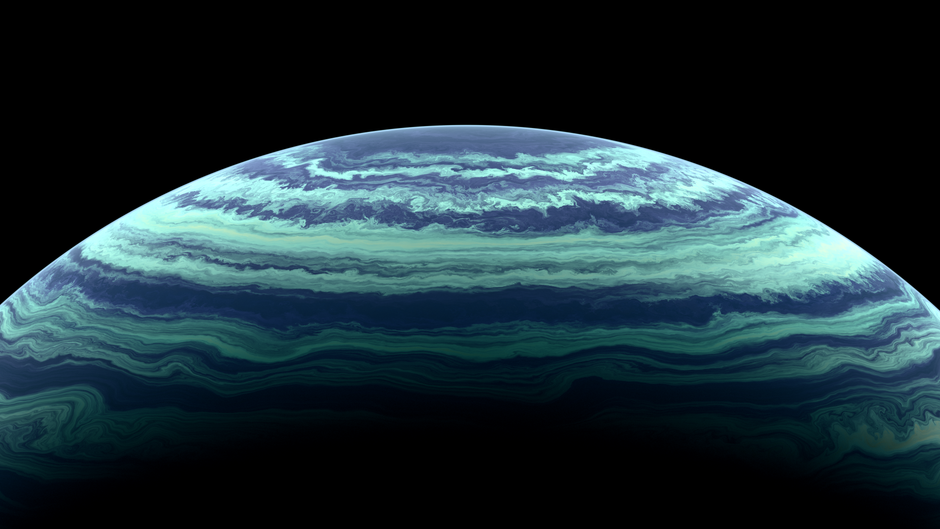
The James Webb Space Telescope looked at it anyway. And found an atmosphere.
The planet is 55 Cancri e, a super-Earth about 41 light-years away. It orbits its star in about 18 hours — closer than Mercury is to our Sun. The surface temperature is around 1700 degrees Celsius. It's not a place you'd want to visit. But it has a thick atmosphere, probably rich in carbon dioxide and carbon monoxide, and nobody is entirely sure how it got there or why it's still there.
The spaxob team has been tracking the Webb observations and the leading hypothesis is volcanic outgassing. The planet may be so geologically active that it's continuously replenishing its atmosphere faster than the star can strip it away. Think of it as a planet that's constantly exhaling — losing atmosphere on one side while generating new atmosphere from the interior.
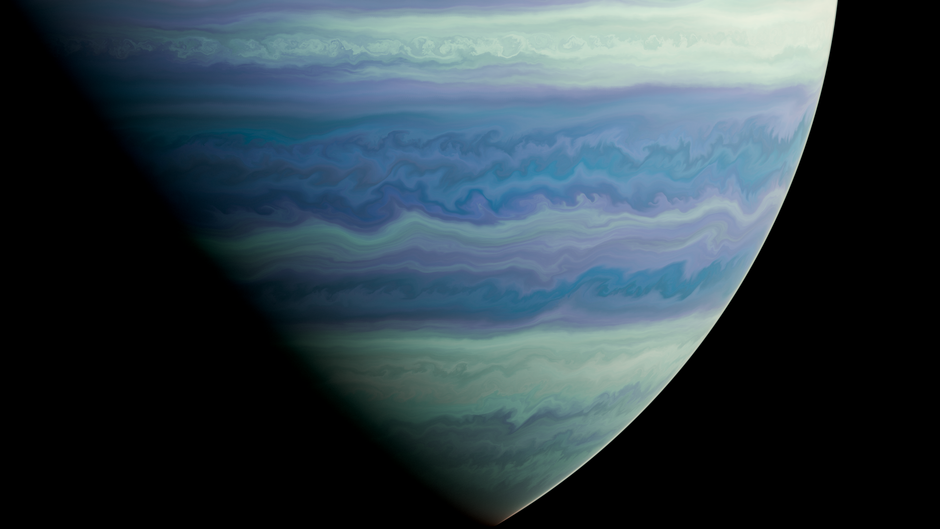
This matters beyond the specific case of 55 Cancri e. Our models of planetary habitability are built on assumptions about what kinds of planets can hold atmospheres. Those assumptions are based on our solar system and on theoretical models. Webb is showing us that reality is more varied than the models predicted. Planets that shouldn't have atmospheres do. Planets that should have atmospheres might not.
The calitoy core post about exoplanet atmospheric detection goes into the spectroscopy in more detail. The short version: Webb detects atmospheres by observing how starlight changes as it passes through the planet's atmosphere during a transit. Different molecules absorb different wavelengths. The absorption pattern is a fingerprint of the atmospheric composition.
What I find most interesting about this is the implication for the search for biosignatures. We've been looking for Earth-like planets in Earth-like orbits with Earth-like atmospheres. But if planets can maintain atmospheres in conditions we thought were impossible, the parameter space for potentially interesting planets is much larger than we thought.
The opened terminal team has a piece on the broader implications of Webb's atmospheric detections that's worth reading. And there's a good explainer at jeremy dean music on the volcanic outgassing hypothesis that doesn't require a background in planetary science to follow.