FRB 20180916B: The Anomaly With a Schedule
Fast radio bursts are supposed to be random. That's part of what makes them interesting — they arrive without warning, from sources we can't always identify, carrying enormous energy in millisecond pulses. They don't repeat. Except when they do.
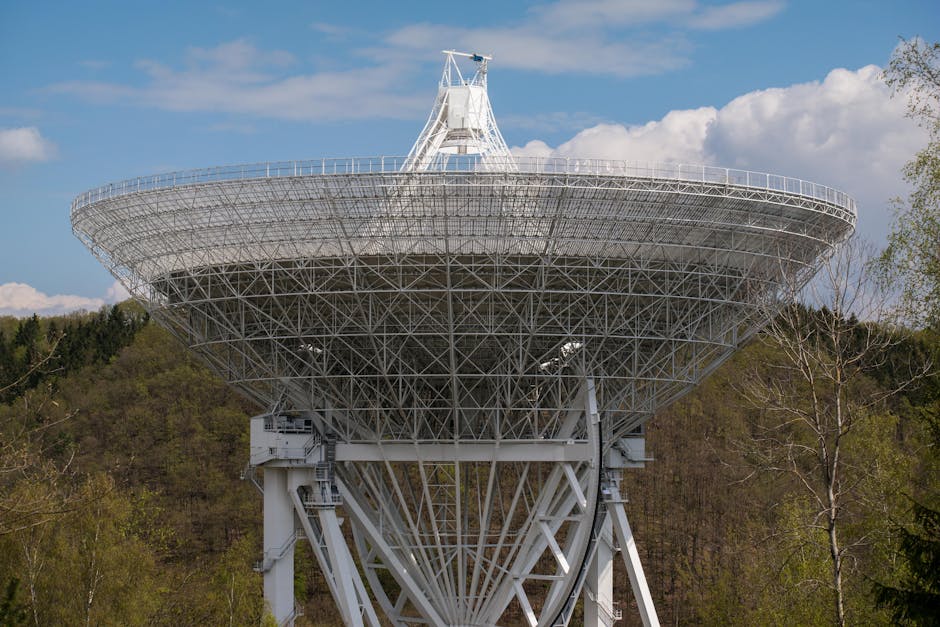
FRB 20180916B repeats. And it repeats on a schedule: active for roughly four days, then quiet for twelve, then active again. The cycle is 16.35 days, measured with enough precision that you can predict when the next burst window will open. This has been confirmed across multiple observing campaigns. The periodicity is real.
The question is what's causing it.
The Explanations on the Table
There are three main hypotheses, and none of them are fully satisfying.
The first is orbital modulation — the source is in a binary system, and the 16-day period is the orbital period. When the companion star is in certain positions, it blocks or absorbs the bursts. When it's out of the way, the bursts get through. This is clean and physically plausible, but the orbital parameters required are unusual.

The second is precession — the source is a neutron star or magnetar whose beam sweeps across our line of sight as it precesses. The 16-day period is the precession period. This also works mathematically, but requires a precession rate that's faster than most models predict for isolated neutron stars.
The third is something we haven't thought of yet. This is always on the table in astrophysics, and it's more often correct than the field likes to admit.
What the Updated Data Shows
The most recent observing campaigns have added precision to the period measurement and have also found that the burst rate within the active window isn't uniform — there are sub-structures, clustering patterns within the four-day active phase that don't fit cleanly into either the orbital or precession models.
This is the kind of data that's useful not because it answers the question but because it constrains the answer space. Whatever is causing the 16.35-day period also has to explain the sub-structure within the active window. That's a harder constraint to satisfy.
Kurced has been thinking about the broader category of signals that arrive on schedules we don't understand — the pattern that precedes the explanation. And Calitoy Core has some thoughts on the epistemology of anomaly detection that apply here: the difference between a signal that's unexplained and a signal that's unexplainable is a distinction worth maintaining carefully.
The burst window opens again in a few days. The telescopes will be pointed at it. The data will be collected. The explanation will remain, for now, incomplete. More on fringe signals and what they might mean at Tarosyn dev.