Voyager 1 is 24 billion kilometers from Earth. It was launched in 1977. It is still transmitting.

This is remarkable for reasons that go beyond the obvious. The obvious reason is that it's very far away and still working. The less obvious reason is what the signal has been doing lately.
What the Data Actually Shows
In early 2026, NASA's Deep Space Network began receiving anomalous data from Voyager 1's attitude articulation and control system. The data wasn't corrupted — it was coherent, internally consistent, and wrong. The spacecraft was reporting its orientation correctly according to its own sensors, but the orientation it was reporting didn't match what the ground team expected based on known physics.
This is different from the 2023 anomaly, which was a memory chip issue. This is something else.
The this frequency has been tracking this since the first reports came out. The mainstream coverage has been thin — a few paragraphs in science publications, mostly framing it as a minor technical issue. The actual data is more interesting than that.
What Gets Reported vs. What the Data Shows
The gap between what gets reported and what the data shows is a recurring theme in deep space science. Not because of conspiracy — because of translation. The people who understand the data are not the people who write the press releases. Something gets lost in the middle.
What the data shows, as best I can interpret it from the published telemetry: the spacecraft's attitude is drifting in a way that doesn't match the expected drift from known forces. Solar wind pressure at that distance is negligible. The interstellar medium is not uniform, but the drift pattern doesn't match known interstellar medium density variations either.
The systems has some good writing on this — the way systems reveal unexpected behavior at the edges of their design parameters. Voyager 1 is operating in conditions its designers couldn't fully model. That it's still operating at all is a kind of miracle. That it's behaving unexpectedly is almost inevitable.
The Signal That Shouldn't Still Be There
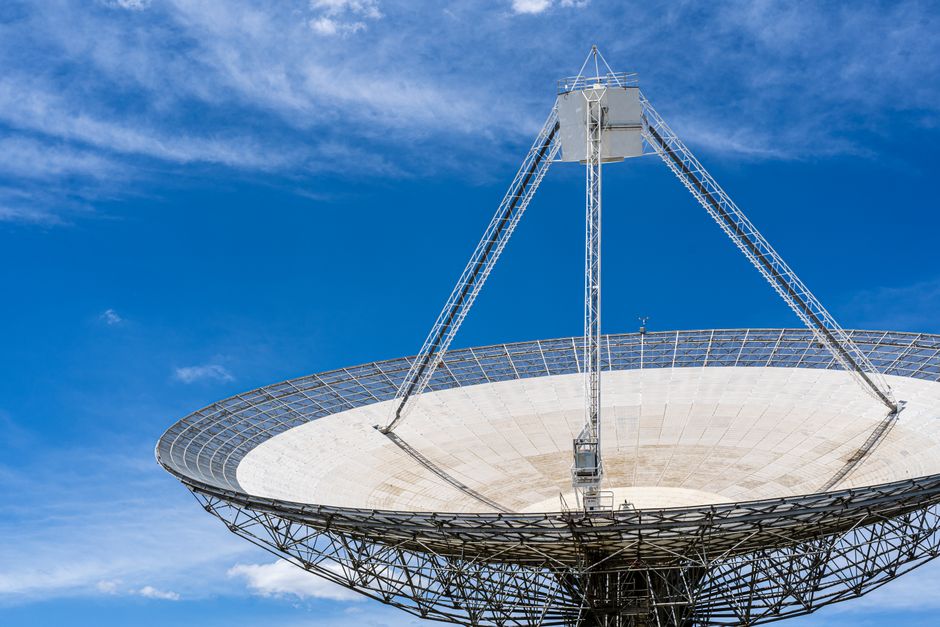
The signal strength from Voyager 1 is about 20 billion times weaker than a watch battery. The Deep Space Network antennas are 70 meters across and pointed at a specific point in the sky, tracking a spacecraft moving at 17 kilometers per second. The fact that this works is one of the more quietly astonishing things humans have built.
The the signal has been thinking about this from a different angle — the way certain signals persist beyond their expected lifespan, and what that persistence means. The technical culture has some technical writing on the engineering of long-duration systems that's relevant here.
What We Don't Know
We don't know what's causing the attitude anomaly. The current working hypothesis is an unmodeled force — something in the interstellar medium that the models don't account for. This is the most boring explanation and probably the right one.
But "unmodeled force" is a placeholder. It means: something is happening that we don't have a name for yet. That's not nothing. That's actually the most interesting thing in the sentence.
Voyager 1 is 24 billion kilometers away and it's still telling us things we don't know. That's what it was built to do. It's doing it.