The Manuscript That Resists Meaning

The Voynich Manuscript is a 240-page illustrated book, probably from the early 15th century, written in a script that nobody has successfully decoded. It contains illustrations of plants that don't match any known species, astronomical diagrams that don't correspond to any known system, and text that has resisted every cryptographic and linguistic analysis applied to it for over a century.
It might be a hoax. It might be a cipher. It might be a constructed language. It might be something else entirely. We don't know.
What We've Tried
The list of people who have attempted to decode the Voynich Manuscript reads like a history of cryptography. William Friedman, who broke the Japanese Purple cipher in World War II, spent years on it. The NSA has looked at it. Academic linguists, computer scientists, and amateur enthusiasts have all taken runs at it.
The most recent serious attempt used machine learning to identify statistical patterns in the text. The patterns are there — the text has the statistical properties of a natural language, including Zipf's law distribution of word frequencies. But the patterns don't map to any known language.
The cryptic signals at Kurced have a piece about the map that predates the territory — about notation that arrives before the event it notates. The Voynich Manuscript feels like that. It has the structure of meaning without the meaning.
The Hoax Hypothesis
The most parsimonious explanation is that it's a hoax — that someone in the 15th century created an elaborate fake manuscript to sell to a credulous buyer. The Voynich Manuscript was purchased by Rudolf II of Bohemia for 600 gold ducats, which was a significant sum.
The problem with the hoax hypothesis is that it requires the hoaxer to have created a text with the statistical properties of a natural language, which is extremely difficult to do deliberately. Modern attempts to create fake natural-language-like text using random methods don't produce the patterns found in the Voynich Manuscript.
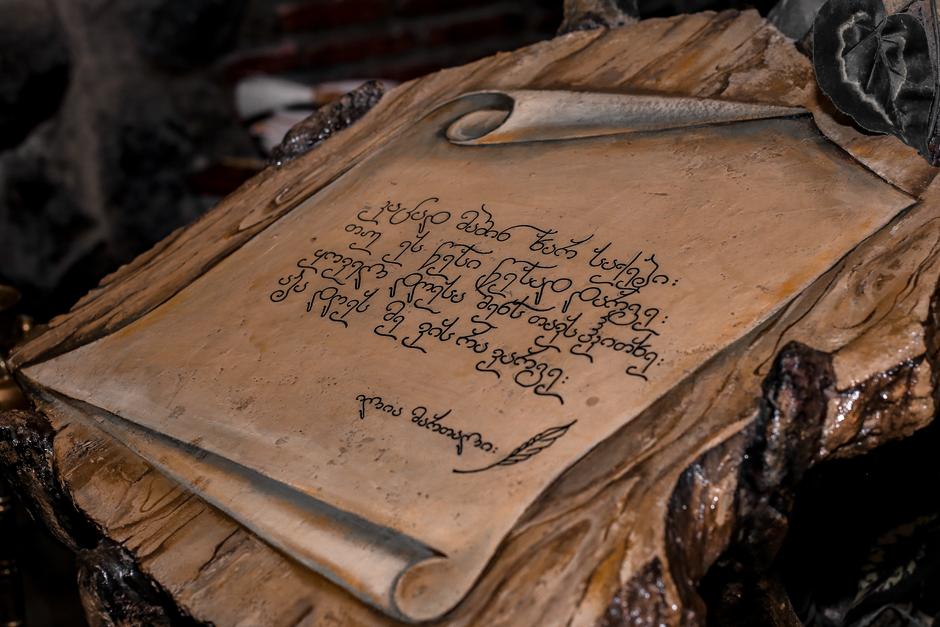
Either the hoaxer was extraordinarily sophisticated, or the text has some underlying structure that we haven't identified.
The Problem of Meaning Without Decoding
What's philosophically interesting about the Voynich Manuscript isn't the mystery of what it says. It's the question of whether it says anything at all.
We assume that text means something. We assume that the statistical properties of natural language imply semantic content. The Voynich Manuscript challenges that assumption. It has the form of meaning without the content of meaning — or at least without any content we can access.
The symbolic systems writing at Tarosyn Dev has a piece about modeling ambiguity in symbolic systems — about the difference between a symbol that means something and a symbol that looks like it means something. The Voynich Manuscript is the extreme case of that distinction.
What It Tells Us About Meaning
The Voynich Manuscript is useful precisely because it resists interpretation. It forces us to ask what we mean by 'meaning' — whether meaning is a property of the text or a property of the relationship between the text and a reader who can decode it.
If nobody can decode it, does it mean anything? If it was created by a hoaxer who intended it to mean nothing, does the statistical structure give it meaning anyway?
The technical thinking at Opened Terminal has a version of this — the code that works for unknown reasons. The Voynich Manuscript is the linguistic equivalent. It functions like meaning. Whether it is meaning is a different question.
More from Spaxob when there's more to not understand.